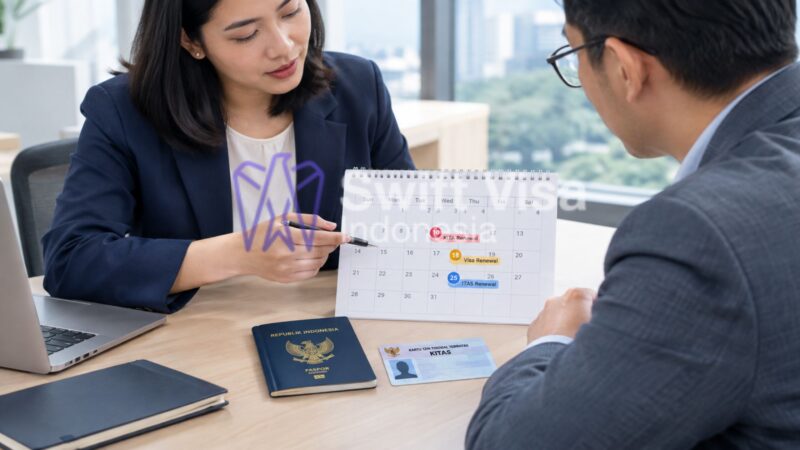



Visa compliance is not optional in Indonesia.
When companies or expatriates delay or ignore visa renewals, they risk fines, deportation, blacklisting, and even company operational suspension.
This article explores real cases and provides a breakdown of what happens when visa compliance is neglected and how Swift Visa Indo helps organizations avoid these outcomes.
1. The Hidden Risk Behind Missed Renewals
In Indonesia, every work visa (KITAS) and manpower permit (RPTKA, Notifikasi) has a defined expiry date.
When a company misses its renewal timeline, it automatically triggers:
- Immigration overstay fines (IDR 1,000,000/day).
- DKP-TKA non-payment penalties.
- Employer reputation risk with the Ministry of Manpower.
Once the visa renewal Indonesia process is overdue, both the employee and company face legal action.
2. Case Insight: When One Week Cost Millions
A mid-sized Japanese manufacturer in Bekasi delayed renewing 12 expatriate KITAS by just seven days.
The result:
- IDR 84 million in fines.
- Temporary freeze on new foreign worker applications.
- Mandatory internal audit by Manpower.
The issue was traced back to a lack of centralized visa monitoring.
Swift Visa Indo later implemented an automated renewal alert system, saving the company from repeat losses.
(External link: Ministry of Manpower Indonesia)
3. Legal Consequences of Non-Compliance
Ignoring visa renewals violates multiple regulations, including:
- Law No. 6/2011 on Immigration
- Regulation No. 8/2021 on Foreign Workers
Consequences include:
- Overstay fines: up to IDR 25 million or deportation.
- Company blacklisting: suspension from manpower system (TKA Online).
- Permit revocation: immediate cancellation of KITAS and RPTKA.
- Re-entry restrictions: employees barred for 6–12 months.
Swift Visa Indo ensures full compliance through its visa renewal tracking and reporting features.
4. The Financial Impact of Ignoring Renewals
Risk | Estimated Cost (IDR) | Impact |
| Overstay fines (per employee) | 1,000,000/day | Direct loss |
| DKP-TKA late payment | 12,000,000–24,000,000 | Penalty |
| Manpower audit cost | 25,000,000–50,000,000 | Operational delay |
| Legal representation | 20,000,000–100,000,000 | Compliance recovery |
| Total average loss | 100,000,000–200,000,000 | Company-wide |
(External link: Directorate General of Immigration)
5. Why Renewals Are Missed
Common internal issues include:
- No HR compliance officer assigned.
- Manual visa tracking on spreadsheets.
- Lack of coordination between HR and Finance for DKP-TKA payments.
- Not updating contact details on the immigration portal.
6. How Swift Visa Indo Prevents Non-Compliance
Swift Visa Indo provides:
- Automated email alerts 60 and 30 days before visa expiry.
- Renewal dashboards for HR and management.
- Integration with payroll and manpower systems.
- Regular compliance reports for group companies.
The firm also offers legal support for clients who have already missed renewals, helping them file corrective applications or appeal penalties.
(Related: Corporate Services Indonesia)
7. Case Study: Rapid Recovery from Non-Compliance
A European consulting firm with 6 foreign staff discovered all KITAS expired during a company restructuring.
Immigration issued a notice of potential deportation.
Swift Visa Indo managed to:
- File emergency renewal and extension under Article 63.
- Pay DKP-TKA arrears within 48 hours.
- Submit updated RPTKA and employment contracts.
Outcome:
- Company restored compliance within 12 working days.
- Zero deportations or blacklisting.
8. Key Takeaways
- Visa renewal in Indonesia is a legal obligation, not a formality.
- Non-compliance costs far more than proactive management.
- A centralized system like Swift Visa Indo’s saves money, time, and legal risk.
Ensure your company stays compliant.
Schedule a consultation with Swift Visa Indo today.