

1. Understanding Employer Responsibility in Corporate Immigration
Hiring foreign professionals in Indonesia places legal responsibility on the sponsoring company. Immigration compliance is not handled by the employee alone. Employers are fully accountable for visa validity, work permits, reporting, and exit procedures.
Every Indonesia visa for corporate employees is tied directly to the sponsoring entity. Any violation may result in penalties, suspension of sponsorship rights, or operational disruption.
Swift Visa Indo assists companies by aligning immigration processes with corporate governance and HR compliance frameworks.
2. Company Eligibility as a Visa Sponsor
Before sponsoring any foreign employee, companies must ensure they are legally eligible. This includes:
- valid business licenses and NIB
- permitted business activities for foreign employment
- compliance with OSS and manpower systems
- accurate corporate data matching immigration records
This eligibility forms the foundation of company visa sponsorship Indonesia. Without it, work permits and visas cannot be issued.
As part of its corporate services Indonesia, Swift Visa Indo verifies sponsor readiness before starting any application.
3. RPTKA as a Mandatory Employer Obligation
RPTKA approval is the first formal responsibility of the employer. It demonstrates:
- the business justification for hiring foreign staff
- the role and position of the employee
- employment duration and work location
- commitment to knowledge transfer
RPTKA approval is mandatory for most corporate-sponsored foreign employees and directly impacts the issuance of an Indonesia work permit.
Mistakes at this stage delay all subsequent processes. Employers often work with a corporate immigration consultant Indonesia to ensure accuracy and compliance.
4. Work Permit and Visa Accuracy
Employers are responsible for ensuring that:
- the visa index matches the employee’s role
- the work location aligns with approved documents
- the employment duration matches contract terms
- all personal data is consistent across systems
Any mismatch may invalidate the foreign employee visa Indonesia and expose the company to sanctions.
Swift Visa Indo manages document coordination and validation to prevent inconsistencies throughout the process.
5. Post-Arrival Compliance Obligations
Employer responsibility continues after the employee arrives in Indonesia. This includes:
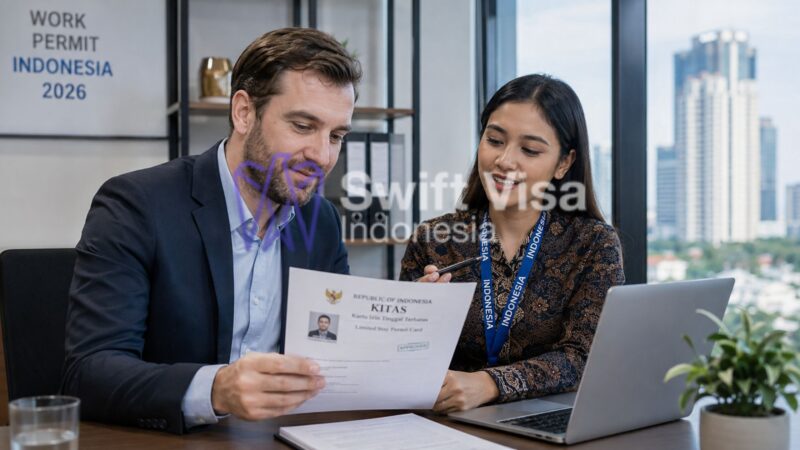
- KITAS activation and reporting
- biometric registration where required
- manpower reporting obligations
- updating internal HR and compliance systems
These steps are part of effective corporate visa management in Indonesia, ensuring that the employee remains legally authorized to work.
6. Tax and Social Security Responsibilities
Employers must assess and manage:
- tax residency status of the employee
- NPWP registration when applicable
- BPJS enrollment requirements
- coordination with payroll and finance teams
Immigration and tax compliance are interconnected. Swift Visa Indo works alongside internal teams or partners to ensure data consistency as part of integrated business immigration solutions Indonesia.
7. Monitoring Visa Validity and Renewals
Employers are legally responsible for tracking:
- visa and KITAS expiry dates
- RPTKA validity
- contract changes affecting visa eligibility
Renewals should begin several months before expiry to avoid overstay or operational interruption.
A structured renewal process is a core element of professional corporate visa management in Indonesia.
8. Role Changes and Internal Transfers
If a foreign employee’s role, title, or location changes, employers must:
- assess whether the existing visa remains valid
- update RPTKA and work permit data
- notify relevant authorities if required
Failure to update records can invalidate the Indonesia visa for corporate employees even if the visa has not expired.
9. Exit Procedures and Sponsorship Closure
When employment ends, employers must complete:
- KITAS and work permit cancellation
- exit reporting
- tax and BPJS closure
- documentation archiving
Proper exit management protects the company’s compliance record and future sponsorship capability.
10. How Swift Visa Indo Supports Employers
Swift Visa Indo provides structured support covering:
- sponsor eligibility verification
- RPTKA and work permit processing
- visa and KITAS management
- compliance monitoring and renewal tracking
- exit procedure coordination
This allows companies to manage Indonesia visa for corporate employees within a predictable and compliant framework.
Key Takeaways for Corporate Employers
- Employers carry full legal responsibility for corporate-sponsored visas
- Accurate documentation and timely reporting are mandatory
- Immigration compliance must align with HR and finance operations
- Professional support reduces risk and operational burden
For companies employing foreign professionals, a structured immigration strategy is essential.