


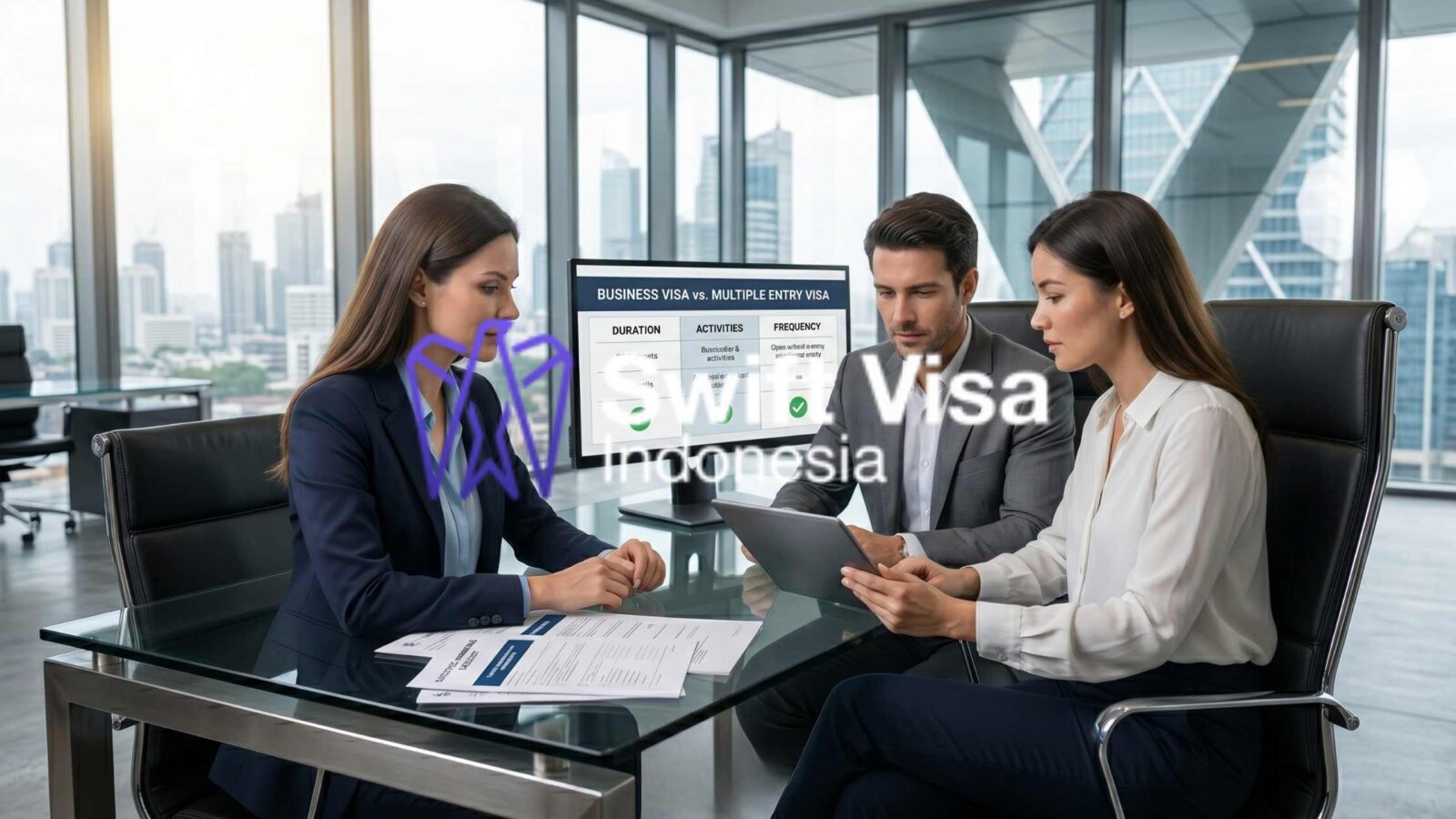
As global markets integrate, multinational corporations in the United States and Europe frequently deploy cross-border executives, regional asset managers, and technical consultants to check on operations in Southeast Asia. When expanding into Indonesia, choosing the right corporate entry pathway is a foundational step for commercial mobility.
For operational planners and CFOs looking to manage corporate travel budgets, the choice usually comes down to two options: the single-entry Business Visa Indonesia or the comprehensive Multiple Entry Visa Indonesia.
While both frameworks are built for commercial visitors who are not locally employed, choosing the wrong one can lead to unnecessary border delays or corporate compliance risks. This comparative analysis outlines the structural differences, allowable activities, and cost efficiencies of both visa types to help your global mobility desk make an informed decision.
Allowable Corporate Activities and Legal Boundaries
The most critical factor when evaluating an entry pathway is ensuring your executive’s intended on-the-ground activities match local immigration laws. Under Indonesian immigration regulations, both single-entry and multiple-entry business visas are classified as non-work visit visas (Index C).
[Permitted Non-Work Commercial Activities]
├── Attending Board Meetings & Corporate Summits
├── Conducting Inter-Company Audits & Financial Reviews
├── Engaging in Contract Negotiations & Commercial Sales Deals
└── Sourcing Local Distributors or Conducting Market Research
Strict Operational Restriction: Neither visa allows hands-on operational management, local employment, or direct revenue generation within Indonesia. If your international personnel need to oversee long-term projects or sign local employment contracts, your enterprise must secure a dedicated Corporate Visa Indonesia (Working KITAS) instead.
Structural Comparison: Single-Entry vs. Multiple-Entry
To help your HR team plan global mobility pathways, here is a breakdown of the structural differences between both options under current regulations:
The Single-Entry Business Visa (Index C2)
This pathway is built for sporadic corporate visits, such as an annual stakeholder audit or a one-off contract negotiation.
- Validity and Stay Duration: It grants an initial stay of 60 days. If a business trip needs to be extended, the visa can typically be renewed internally for additional 60-day periods.
- The Single-Entry Constraint: The defining feature of this visa is that it expires the moment the traveler clears border control to leave Indonesia, regardless of how many days are left on the permit.
The Multiple Entry Visa Indonesia (Index D2)
This framework is built for regional directors, executive stakeholders, and global procurement managers who need to travel frequently between international headquarters and Indonesian subsidiaries.
- Long-Term Validity: The visa is issued with a long-term validity period, typically allowing entries over 1 to 2 years.
- Stay Limitation per Entry: The holder can enter Indonesia as many times as needed during the validity period, with each individual stay capped at a maximum of 60 days.
- Operational Efficiency: The executive can leave the country at any time without resetting or canceling their overarching visa framework. This removes the administrative burden of filing new paperwork before every flight.
Cost-Benefit and Operational Efficiency Analysis
For corporate financial teams, evaluating these entry pathways involves looking at both upfront government fees and overall administrative efficiency.
| Cost & Operational Metrics | Single-Entry Business Visa | Multiple Entry Visa Indonesia |
| Initial Stay Allowance | 60 Days | 60 Days per Entry |
| Overarching Framework Validity | 90 Days to Enter | 1 to 2 Years |
| Extension Feasibility | Extendable up to 2x (60 days each) | Non-extendable per trip (Must exit) |
| Best Used For | One-off contract signings, audits, or annual AGMs | Frequent regional oversight, ongoing B2B negotiations |
Calculating Corporate ROI
If your Western executives only travel to Jakarta or Bali once or twice a year, the single-entry pathway is usually the most cost-effective choice.
However, if an asset manager needs to travel to Indonesia quarterly or bi-monthly, the Multiple Entry Visa Indonesia offers clear advantages. It saves your global mobility desk from paying repeat application fees, eliminates ongoing courier fees for passport logistics, and removes the administrative downtime of waiting for new visas to process before every trip.
Streamlining Cross-Border Corporate Travel with SwiftVisaIndo
Choosing the right business visa pathway requires clear corporate sponsorship documentation and deep local knowledge of changing immigration rules. Minor mistakes in your local corporate sponsor files can lead to rejections at the electronic visa phase, disrupting your cross-border business plans.
At SwiftVisaIndo, our Corporate Services Indonesia division specializes in handling end-to-end commercial mobility setups for multinational firms. From drafting compliant corporate sponsorship files to managing bulk multiple-entry portfolios for your executive team, our legal consultants ensure total compliance with local immigration rules.
Contact SwiftVisaIndo’s B2B Travel Desk Today to consult with an expert and set up an efficient, compliant corporate travel framework for your executive team.