


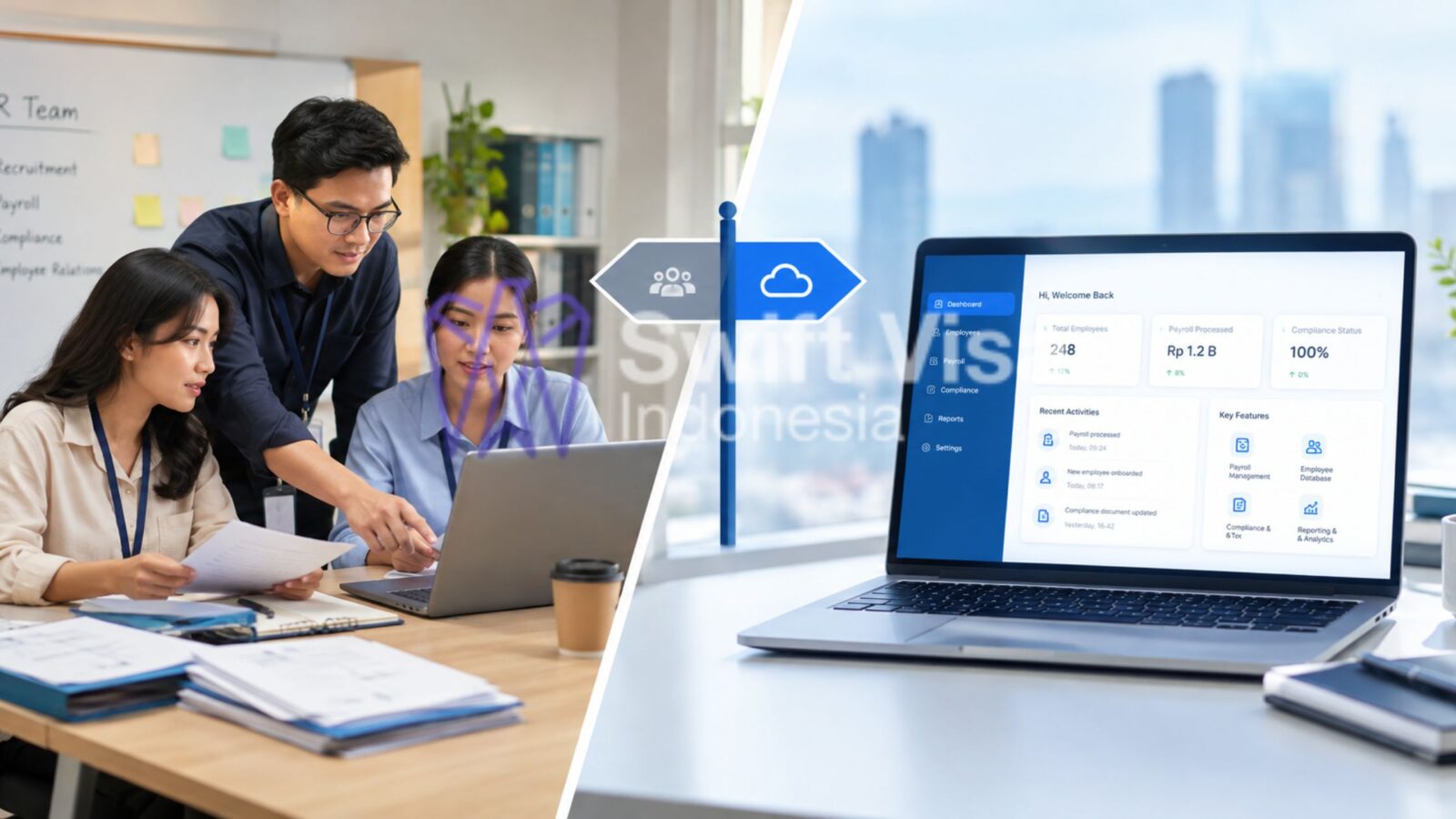
Every foreign company operating in Indonesia eventually faces the same question: build an internal team to handle immigration, payroll, and compliance, or bring in a specialized partner to manage it. The right answer depends less on company size and more on one specific number — how many foreign employees you’re managing, and how fast that number is growing.
This guide breaks down when in-house management makes sense, when it doesn’t, and what a properly structured Corporate Services Indonesia partnership actually covers.
The Core Decision: In-House vs. Outsourced
For smaller operations, an in-house approach can feel manageable — one or two HR staff handling documentation alongside their other responsibilities. But as a company scales, particularly once it starts hiring foreign employees, managing payroll, or filing taxes, compliance complexity grows faster than headcount does.
A useful rule of thumb: fewer than 10 expatriates, in-house management is often workable. Once a company crosses that threshold, the coordination burden across work permits, manpower reporting, and corporate tax filings typically starts slowing operations down rather than simply adding a manageable amount of extra work.
What In-House Requires
- Dedicated HR and legal staff familiar with Indonesian immigration and labor law
- Internal systems to track visa expiry, renewal deadlines, and compliance reporting
- Direct relationships with government offices, built over time
- Ongoing training as regulations change
What Outsourcing Typically Delivers
- Complete corporate services coverage — payroll, manpower registration, and visa management — often at a fraction of the cost of building an equivalent internal team
- Faster turnaround: documentation that might take an internal team weeks can often be completed within days through an established provider’s direct government channels
- Access to specialized expertise without the cost of hiring and training internal staff full-time
- Reduced risk of errors and government penalties, since providers stay current on regulatory changes as part of their core business
What a Complete Corporate Services Partnership Covers
A properly structured Corporate Services Indonesia engagement typically integrates several functions under one coordinated system rather than handling them as separate, disconnected tasks:
- Visa and immigration management — Foreign Worker Visas for technical specialists and managers, Foreign Investor Visas for shareholders or directors, and company-sponsored visa/KITAS processing, including bulk applications for multiple employees at once
- Payroll and tax administration — ensuring expatriate compensation is correctly registered and reported
- Manpower compliance reporting — the recurring filings that keep a company in good standing with the Ministry of Manpower
- Digital compliance infrastructure — real-time document tracking, expiry notifications for visas and licenses, secure storage with audit logs, and shared dashboards for HR and finance teams to maintain visibility without constant manual check-ins
PT PMA Setup: The Foundation Most Corporate Services Build On
For foreign-owned companies, most corporate services ultimately connect back to the PT PMA structure the most common legal entity for foreign investment in Indonesia:
- Minimum paid-up capital requirement: IDR 10 billion
- Typical processing time: around 15 working days
- Estimated setup cost: around IDR 23,500,000, depending on sector and structure
- Once established, the entity can hire employees, issue invoices, and generate revenue
A Practical Example
A European financial institution operating in Jakarta shifted from managing its foreign staff compliance internally to a fully outsourced corporate services model. The move consolidated visa management, manpower reporting, and payroll into a single coordinated system with digital tracking. The result was a significant reduction in internal reporting time, freeing the company’s local HR staff to focus on operational priorities rather than manual compliance coordination.
Frequently Asked Questions
At what company size does outsourcing corporate services make more sense than in-house management? There’s no universal threshold, but companies managing fewer than 10 expatriates often find in-house workable. Beyond that, the coordination burden across permits, reporting, and tax filings tends to outpace what an internal team can efficiently manage without dedicated specialization.
Does outsourcing corporate services mean giving up internal HR and legal oversight? No. A well-structured outsourced partnership functions as a specialized layer supporting internal teams, not a replacement for them internal HR and legal staff retain oversight while day-to-day compliance execution is handled externally.
What’s included in a “bulk application” for company-sponsored visas? It refers to processing visa and KITAS applications for multiple employees simultaneously, coordinated as one batch rather than filed individually, which helps keep onboarding timelines aligned across an entire team.
How long does PT PMA setup typically take before corporate services can begin? Around 15 working days is typical, though this can vary by sector and the complexity of the business classification involved.
Making the Right Call for Your Company’s Stage
The in-house versus outsourced decision isn’t really about company size on its own it’s about whether your current internal capacity can keep pace with a growing expatriate workforce and the compliance obligations that come with it. Companies that make this call proactively, before compliance gaps surface, tend to scale more smoothly than those that wait until a renewal deadline or audit forces the decision.
Once your corporate entity and services structure are in place, the next consideration for most growing companies is sponsoring and managing visas for the foreign staff who’ll actually run operations see our guide on Company Sponsored Work Visa Indonesia for what that involves.
Weighing whether to build in-house or outsource your corporate services? Contact Swift Visa Indonesia’s corporate consultation desk to assess what fits your company’s current stage.