


Foreign investors entering Indonesia usually budget for legal fees. Far fewer budget for the time cost of getting the entity structure wrong on the first attempt. Company Establishment Indonesia through a PT PMA (foreign investment limited liability company) is well-documented in theory, yet the practical sequencing capital requirements, sector restrictions, and licensing order trips up even experienced international investors.
This blueprint walks through what US and European companies need to confirm before incorporation, not after.
PT PMA: The Standard Vehicle for Foreign Ownership
A PT PMA is the primary legal structure allowing foreign nationals or foreign entities to own an Indonesian company outright, subject to sector-specific ownership caps. Unlike a representative office, a PT PMA can engage directly in commercial activity, hire staff, and generate revenue.
Key structural facts investors need upfront:
- Foreign ownership percentage depends entirely on the business sector, governed by Indonesia’s Positive Investment List
- Some sectors permit 100% foreign ownership; others cap it or require a local partner
- The entity must have a registered local address and at least one local or resident director depending on structure
Investors who select their business classification (KBLI code) before confirming sector ownership limits frequently discover restrictions only after the application is partially filed.
Capital Requirements That Catch Investors Off Guard
Indonesia sets minimum investment thresholds for PT PMA entities, typically requiring a stated investment plan well above what a similarly-sized domestic company would need. This isn’t a one-time number to satisfy a form it shapes:
- The paid-up capital that must actually be deposited
- The scale of business plan documentation required to support the stated investment
- Future licensing tiers, since some operational licenses scale with declared capital
Underestimating this at the planning stage leads to either an under-capitalized entity that struggles with later licensing, or a scramble to restructure capital commitments mid-process.
The Licensing Sequence Most Investors Get Backwards
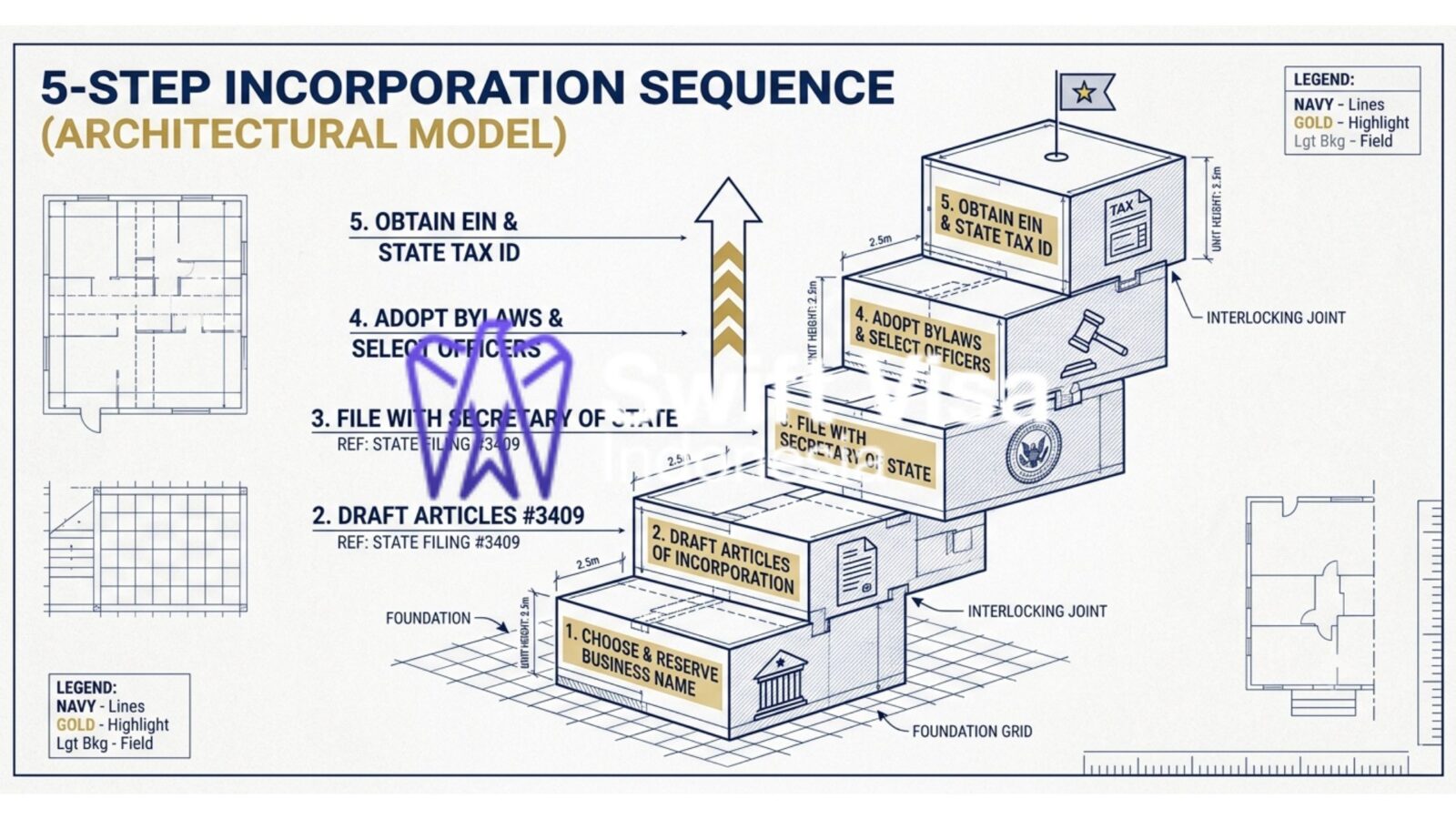
Company establishment in Indonesia isn’t a single registration event it’s a sequence, and skipping ahead creates rework:
- Confirm KBLI business classification and sector ownership rules before drafting Articles of Association
- Register the entity through Indonesia’s OSS (Online Single Submission) system, which issues the NIB (Business Identification Number)
- Secure sector-specific operational licenses tied to the NIB, which vary significantly by industry
- Open a corporate bank account and deposit paid-up capital, often required before certain licenses finalize
- Register for tax obligations (NPWP) and prepare for ongoing compliance reporting
Investors who attempt step 3 before fully completing step 2, or who assume the NIB alone is sufficient operational authorization, frequently face delays when sector regulators request licenses the NIB doesn’t automatically include.
Sector Realities for US and European Investors
Technology, consulting, and certain trade sectors are generally more accessible to full foreign ownership. Sectors involving natural resources, certain manufacturing categories, and select service industries often require local partnership or carry foreign ownership caps. The Positive Investment List changes periodically, which means a sector classification that was open three years ago may carry new restrictions today a reason to verify current rules rather than rely on prior market knowledge.
What “Soft Landing” Actually Requires
Investors who move efficiently through company establishment treat legal setup and immigration planning as one combined timeline, not two separate projects. The PT PMA structure determines what visas and work permits the company can later sponsor for foreign staff — meaning incorporation decisions made on day one directly shape how easily you can bring in expatriate management later.
Confirm Sector Rules Before You Draft a Single Document
Before engaging a notary or drafting Articles of Association, confirm your sector’s current foreign ownership classification under the Positive Investment List. That single verification step done before any paperwork prevents the most expensive restructuring investors face mid-process.