


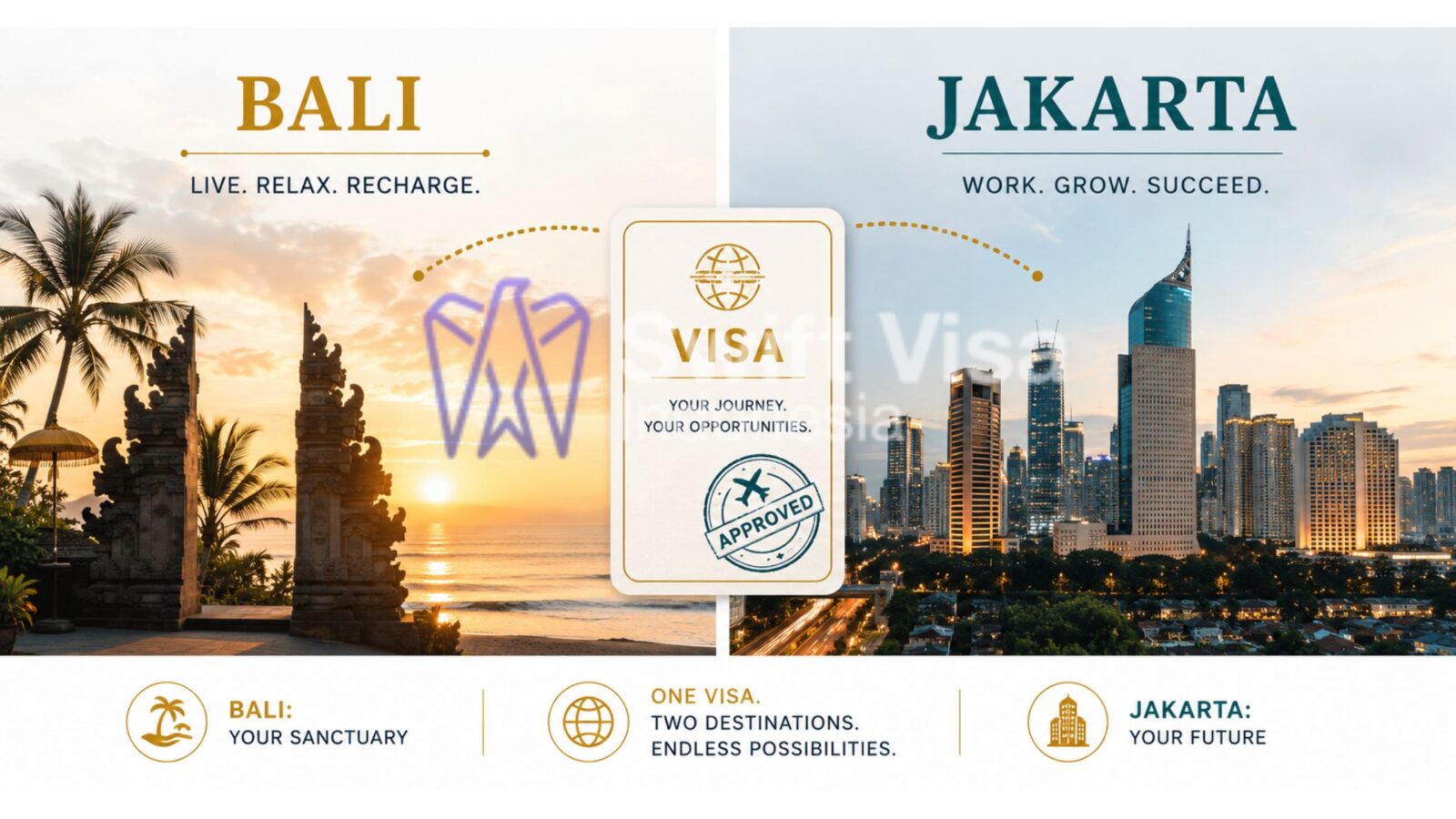
Retiring abroad is usually framed as a lifestyle decision. For many UK, German, and Australian retirees considering Indonesia, it’s increasingly a financial one too the combination of a manageable cost of living and a structured Retirement Visa Indonesia pathway makes long-term residence considerably more achievable than most assume.
This guide covers what the retirement visa actually requires, how Bali and Jakarta differ as retirement destinations, and the planning steps that prevent a dream retirement from becoming a paperwork headache.
Who Qualifies for Indonesia’s Retirement Visa
Indonesia’s retirement visa pathway is generally available to foreign nationals above a set minimum age, who can demonstrate sufficient retirement income or savings and commit to specific residency conditions. Core requirements typically include:
- Minimum age threshold (commonly set around 55 and above)
- Proof of pension or sufficient monthly income to support residence without local employment
- A formal undertaking not to engage in paid work within Indonesia
- Health insurance coverage valid in Indonesia
- A local sponsor, often arranged through a registered visa or relocation agency
The visa is explicitly tied to non-working status any retiree who takes on paid consulting or employment while on retirement status moves outside the visa’s legal boundary.
Bali vs. Jakarta: Two Very Different Retirement Profiles
Bali attracts the majority of Western retirees seeking lifestyle-driven relocation beachfront or hillside living, an established expat community, and a slower pace. Healthcare access has improved significantly with private hospitals serving international patients, though complex procedures are sometimes still referred to Singapore or Australia.
Jakarta suits retirees who prioritize access to advanced medical facilities, international schools (for those relocating with family), and direct international flight connections. It trades lifestyle pace for infrastructure depth.
Neither is objectively “better” the right choice depends on whether healthcare access or lifestyle pace is the higher priority for the individual retiree.
Cost of Living Reality Check
For retirees from the UK, Germany, or Australia, Indonesia’s cost of living for housing, domestic help, and daily expenses is meaningfully lower than home-country equivalents though “meaningfully lower” varies significantly between a modest local lifestyle and an expat-standard one with imported goods and private healthcare.
Retirees who plan budgets based on backpacker-era cost assumptions often underestimate:
- Private health insurance premiums, which scale with age
- Property rental rates in expat-concentrated areas of Bali, which have risen substantially in recent years
- The cost of maintaining international banking and pension transfer arrangements
Building the Retirement Relocation Timeline
- Confirm income/pension documentation meets the visa’s proof-of-funds threshold well before applying
- Secure health insurance valid in Indonesia before, not after, arrival
- Choose a sponsor or relocation agency with experience specifically in retirement visa cases, not general tourist visa processing
- Decide on Bali vs. Jakarta based on healthcare priorities and lifestyle goals, then research neighborhood-level cost differences within that choice
- Plan visa renewal cycles in advance, since retirement visas are typically issued for fixed periods requiring renewal
What Catches Retirees Off Guard
The most common surprise isn’t bureaucratic it’s financial. Retirees who relocate without stress-testing their pension income against Indonesian private healthcare costs and renewal fees sometimes find their budget tighter than anticipated within a few years, particularly as age-related insurance premiums climb.
Start With the Financial Test, Then the Visa Application
Before booking flights or signing a property lease, run your projected pension income against realistic Indonesian healthcare and housing costs for your target city Bali or Jakarta specifically, not a national average. That financial test determines whether the retirement visa pathway is the right fit, and getting it right early prevents a costly relocation reversal later.