


Incorporating a PT PMA is the easy part. Tax and Accounting Indonesia compliance is where foreign-owned companies most often accumulate quiet liabilities small reporting gaps in year one that turn into significant penalties by year three. For finance directors overseeing an Indonesian subsidiary from abroad, understanding the ongoing obligations matters as much as the initial setup.
The Tax Obligations That Start the Moment You Incorporate
Once a PT PMA is registered, tax compliance isn’t optional or phased in gradually several obligations begin immediately:
- Corporate Income Tax (CIT), generally assessed at the standard national rate on net taxable income, with monthly installment payments required throughout the fiscal year
- Withholding tax obligations, which apply to a wide range of payments including employee salaries, payments to vendors, and certain cross-border transactions
- VAT (Value Added Tax) registration, required once revenue crosses a defined threshold, with monthly filing obligations once registered
- Monthly and annual reporting deadlines, each carrying separate penalty structures for late or missed filings
A common misconception among new foreign-owned entities is that tax obligations begin once the company is “operational” or generating revenue. In practice, reporting obligations often begin from the date of registration, regardless of revenue status.
Where Foreign-Owned Companies Most Often Slip
Underestimating withholding tax scope. Many foreign finance teams familiar with their home country’s withholding rules assume Indonesian withholding works similarly. The categories of payments subject to withholding and the rates applied differ enough that home-market assumptions create real exposure.
Missing the connection between payroll and tax compliance. Employee income tax (PPh 21) withholding, BPJS contributions, and payroll tax reporting are interlinked obligations that a company managing payroll without local tax guidance can easily under-report.
Treating annual tax filing as the main event. Indonesia’s monthly filing cadence means the annual corporate tax return is essentially a reconciliation of obligations that should already have been met monthly — not a single annual compliance task.
Cross-border payment blind spots. Payments to a foreign parent company management fees, royalties, intercompany loans often carry withholding tax and transfer pricing documentation requirements that get overlooked when finance teams focus only on domestic transactions.
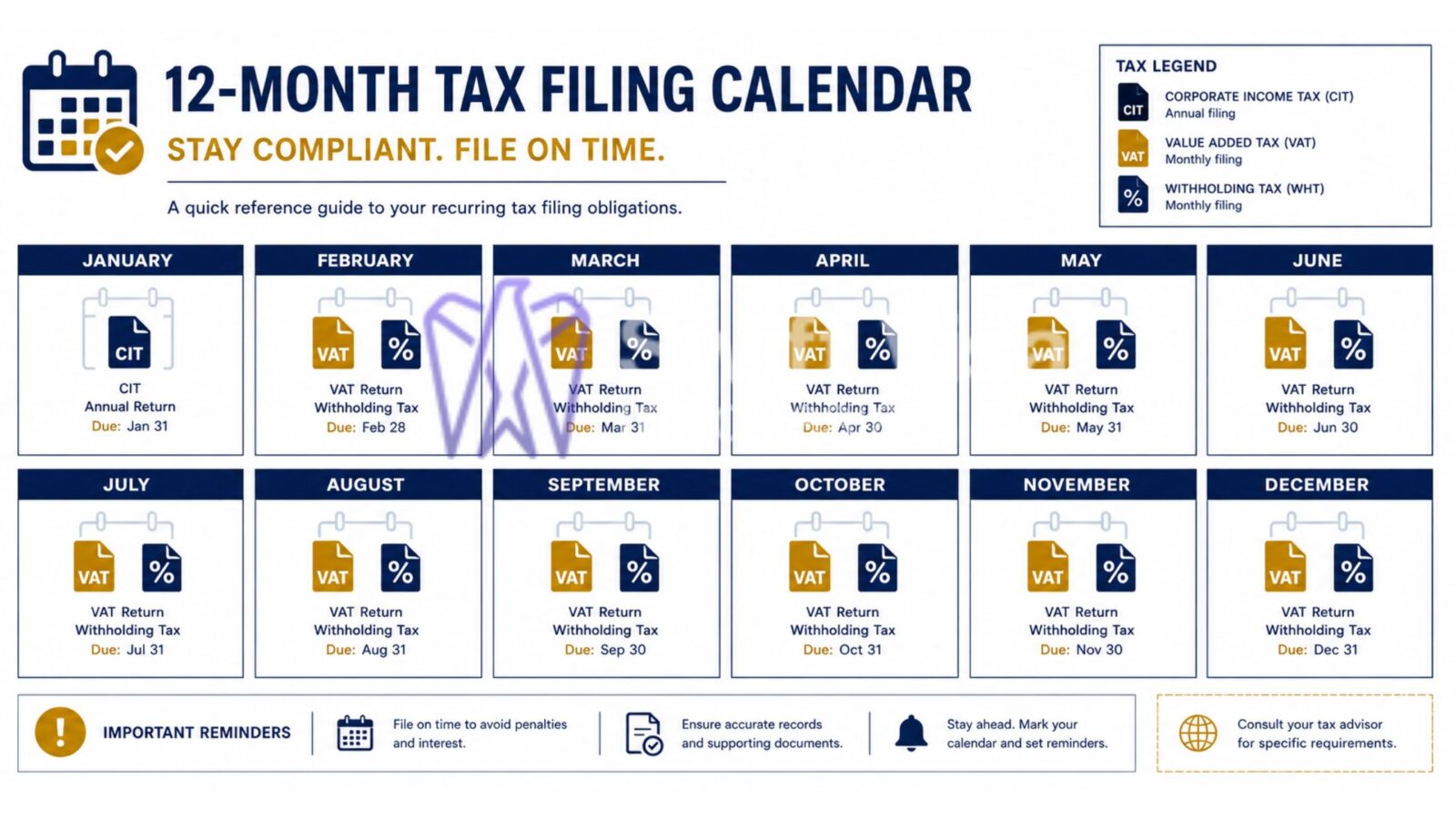
Building a Compliance Calendar That Actually Holds
Companies that stay compliant without constant fire drills build their fiscal year around fixed reporting dates:
- Map every monthly filing deadline (CIT installments, VAT, withholding) onto a shared compliance calendar
- Assign clear ownership for payroll-linked tax obligations separately from corporate tax obligations
- Schedule a mid-year compliance review, not just an annual one, to catch withholding or VAT threshold changes early
- Maintain transfer pricing documentation proactively for any intercompany transactions, rather than reconstructing it under audit pressure
Why Local Accounting Support Matters More Than It Seems
International finance teams sometimes assume Indonesian tax compliance can be managed remotely with periodic local accountant check-ins. Filing cadence, withholding categories, and documentation standards are detailed enough that ongoing local accounting support not annual cleanup is what actually prevents penalty accumulation.
Treat Compliance as a Monthly Discipline, Not an Annual Task
The companies that avoid tax penalties in Indonesia aren’t necessarily the ones with the most sophisticated finance teams they’re the ones who treat monthly filing as non-negotiable from day one of incorporation. If your PT PMA is newly established, build the compliance calendar before your first filing deadline arrives, not after a penalty notice does.